
Infrastructure projects are often judged when construction is underway or after completion. Citizens see workers on site, heavy equipment in operation, and project signboards displaying the contractor, contract value and completion date. For many, this is the first time they become aware of a public investment.
Yet by then, the decisions that matter most have already been made.
Long before construction begins, authorities decide whether a project is needed, where it should be located, how it will be financed, whether it offers value for money, and what environmental and social impacts it may have. These choices are made during projects selection and appraisal- a stage that is rarely visible to the public but largely determines whether an infrastructure investment delivers lasting public value.
Despite its importance, this stage often receives the least attention in discussions on infrastructure transparency. Public scrutiny usually begins during procurement or implementation, when many critical decisions are already fixed and costly to change. If infrastructure is to be sustainable, inclusive and accountable, transparency must start much earlier.
The quality of infrastructure is not determined by construction standards alone. It is
equally shaped by the quality of the decisions made before procurement. Should
assess,
- Does the infrastructure project address a genuine public need and align with national and local development priorities?
- Were alternative options considered before selecting the preferred investment?
- Was a cost-benefit analysis (CBA) undertaken?
- How shall future operation and maintenance will be financed.
- Does the project represent value for money throughout its life cycle, & future maintenance?
- Were environmental, social safeguards, health and climate risks assessed?
- How were the needs of women, persons with disabilities and other vulnerable groups considered?
Why Early Transparency Is Key
Transparency enables Improved decision-making by ensuring infrastructure projects are
selected based on evidence, public need and development priorities, accountability and
reduces integrity risks for sustainable infrastructure.
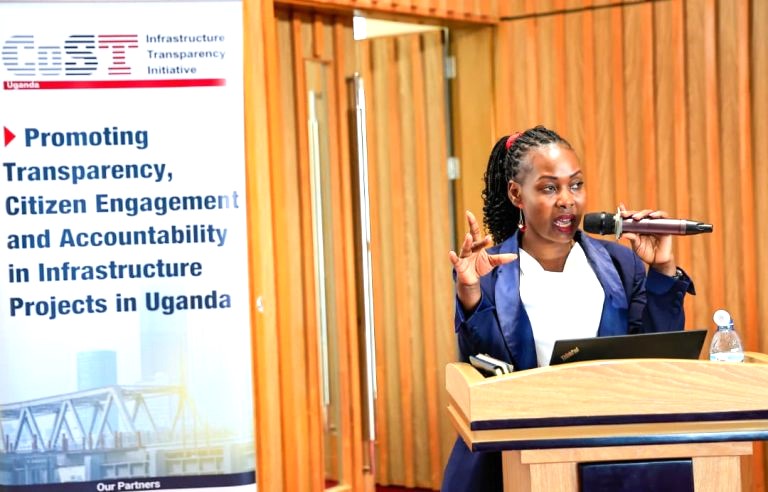
Through the CoST Uganda programme, the Africa Freedom of Information Centre
(AFIC) worked with Kampala Capital City Authority (KCCA) 2025, to examine
transparency during project selection and appraisal. Rather than focusing only on
procurement and construction, the initiative explored what information should be
available before public resources are committed to infrastructure projects. The central
question was simple:
What information should citizens and oversight institutions have before
investment decisions are made?
Early transparency requires information explaining why a project was selected, how it
aligns with development priorities, whether value-for-money assessments were
conducted, and if lifecycle costs and long-term maintenance have been considered. It
also includes publication of environmental and climate assessments,(ESHS) public
consultation processes, social inclusion measures, who controls companies
implementing the project, land acquisition and compensation arrangements, project
risks, where disclosure frameworks apply, and Beneficial Ownership information.
With this disclosure, institutions can identify risks early, oversight bodies can provide
timely scrutiny, and communities can contribute local knowledge that strengthens
project design while strengthening accountability in the infrastructure lifecycle. This
reduces the likelihood of costly changes, delays and disputes during implementation.
Conversely, limited transparency during project selection and appraisal can weaken
planning, increase integrity risks and result in investments that fail to respond to public
priorities. Once procurement has begun, many of these shortcomings become difficult
and expensive to correct in the entire project lifecycle.
Also, the OECD noted that weaknesses in the upstream stages of infrastructure
development including project selection and appraisal can create integrity risks, weaken
planning and contribute to investments that fail to respond to public priorities. Once
procurement begins, many of these early decisions are difficult, and often expensive, to
reverse.
Encouragingly, transparency at this stage can be supported through practical and
standardized disclosure. Building on the CoST Infrastructure Data Standard, additional
sustainability disclosure requirements from the Open Contracting for Infrastructure Data
Standard (OC4IDS) have recently been integrated into Uganda’s Government
Procurement Portal(GPP). This enables Procuring and Disposing Entities (PDEs) to
publish more information on project planning, sustainability and decision-making before
procurement, while strengthening transparency across the infrastructure lifecycle here on GPP
Transparency, therefore, begins when a project is first conceived. Only then can
governments, oversight institutions, citizens and development partners work together to
ensure that infrastructure investments deliver both physical assets, lasting public value,
accountability and public trust. Read about sustainability data points here
“Quality Infrastructure, Stronger Economies, Better Lives”